 Henning Knoepfle
Interaction and UI
- Years
- 2012 to 2015
- Studio
- Technicon Design Shanghai
- Clients
- Audi, Continental, Changan
- My role
- General Manager and Design Director
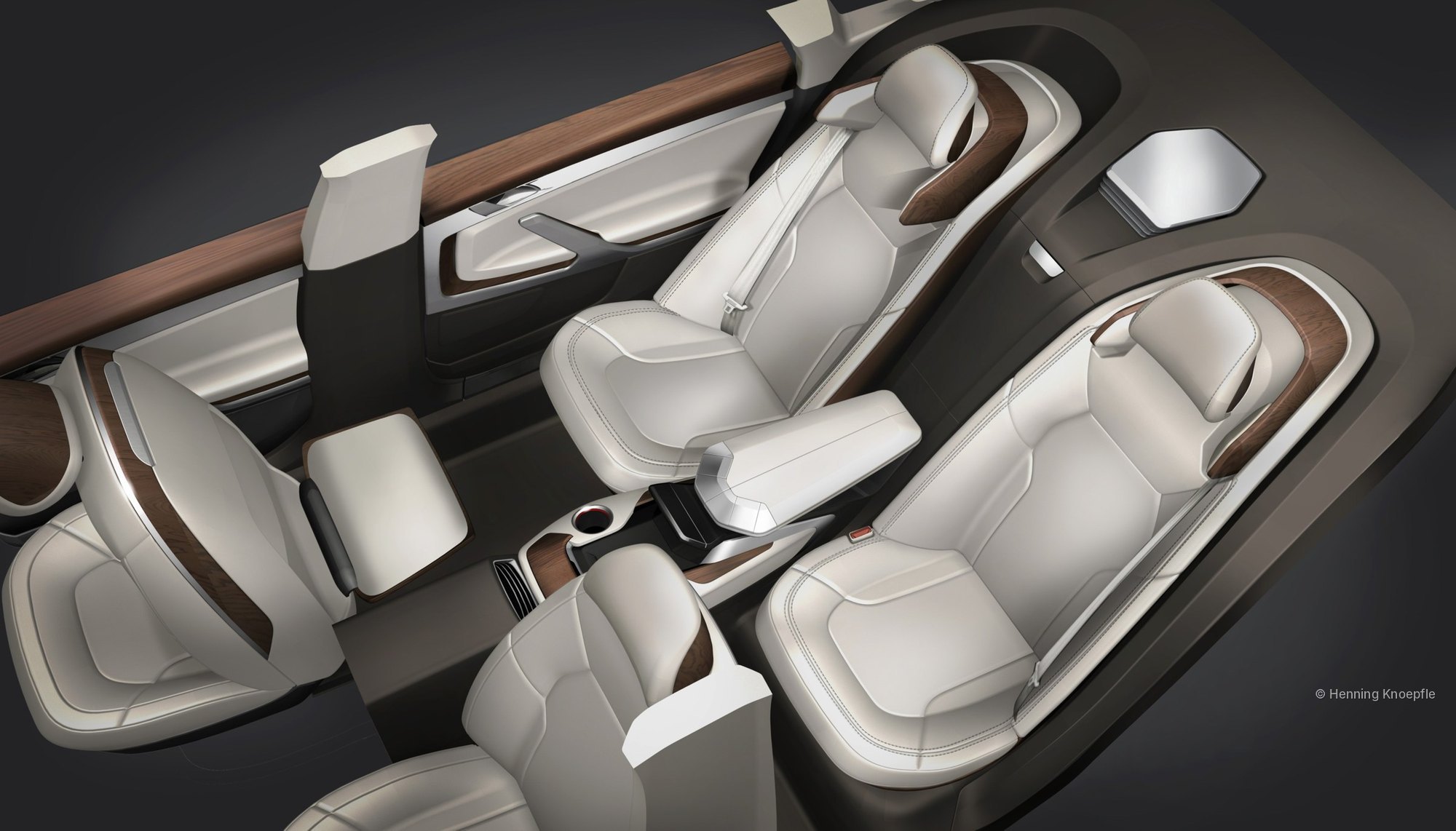
Audi A8 L rear cabin, 2012 to 2014
Audi's joint lab with Tongji University asked what Chinese owners of an A8 L want in the back seat. Over 14 months, 25 Tongji students in four groups researched the question, led by three professors and three outside instructors. My Shanghai team then took over the final design. We kept the strongest student ideas, added our own, and turned them into one interior and a full-size seating buck.
We ended with 14 features in three groups: flexibility, working in the car, and wellness. To test them together we wrote one day in the life of one passenger and drew it frame by frame.
One passenger, one day
Yang Lan is 44 and chairs a media investment company. The persona came from the Tongji research. She works on the way to the office, books a concert on the way to dinner, and sleeps in between.
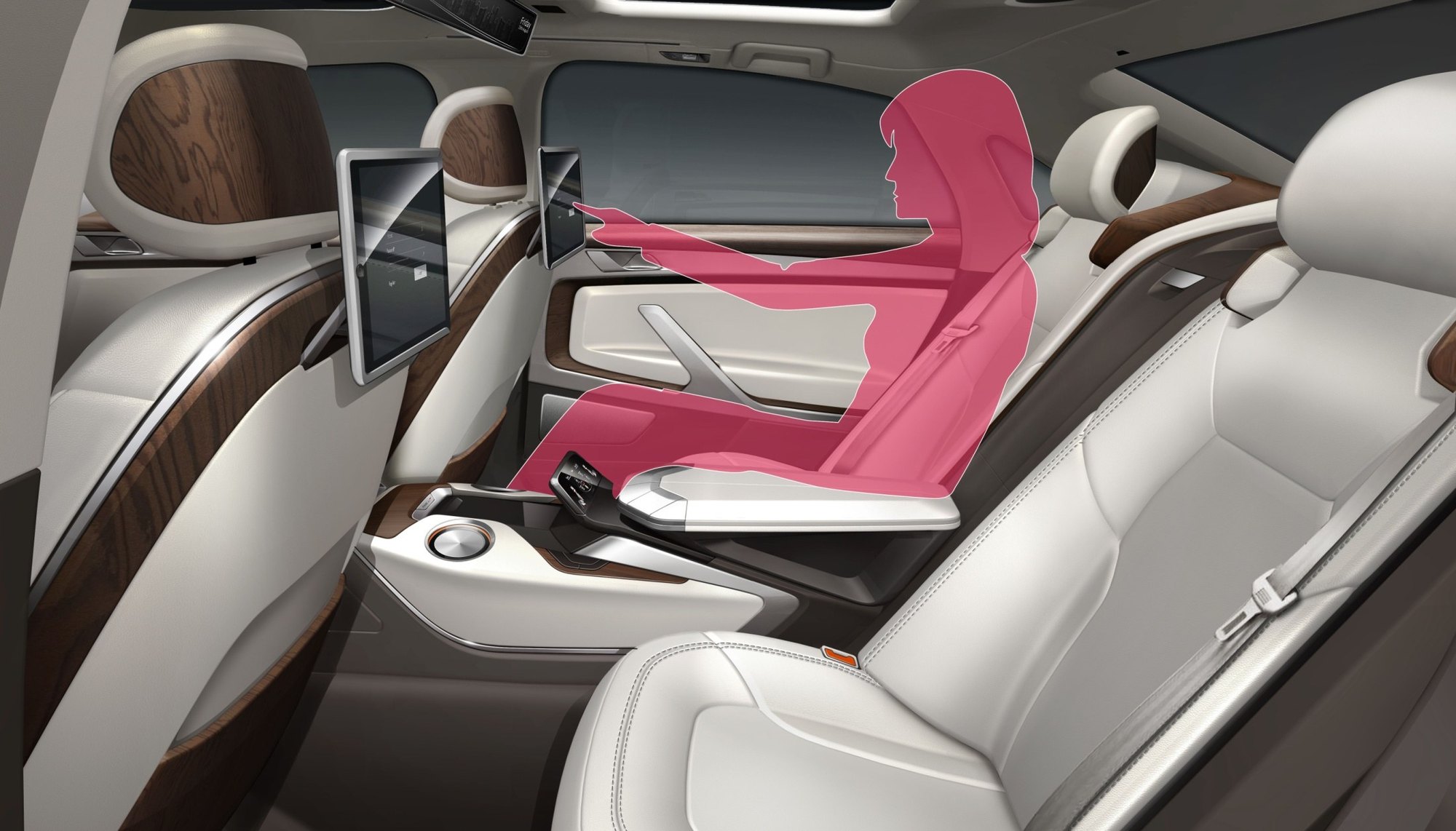
Work. She opens the seat-back display and starts on her email.

On the way. Driving to dinner, the horizon screen shows what is nearby.

Book. A piano concert this week. She books a seat on the rear screen.

Rest. She picks Cocoon mode from the seating menu on the console.

Recline. The front seat moves forward, the footrest deploys and the seat lies back.

Light. The ambient light changes to suit her mood.
The horizon screen
This came out of a brainstorm in our studio after we took over the final design. A 700 by 50 mm strip runs along the roof liner. A city skyline moves slowly across it, with the weather, the date, the next meetings, reminders and stock prices, so she can glance up instead of picking up a device. In the advanced version, motion sensors at both ends let her scroll it with a wave of the hand.



One system
Every screen in the back had to work with the car and with her own devices. The rear displays can mirror the front screen. The touch panel in the console works as a remote. Keyboard and phone connect by Bluetooth, and the car reaches the Audi back end through a firewall.
Built to sit in
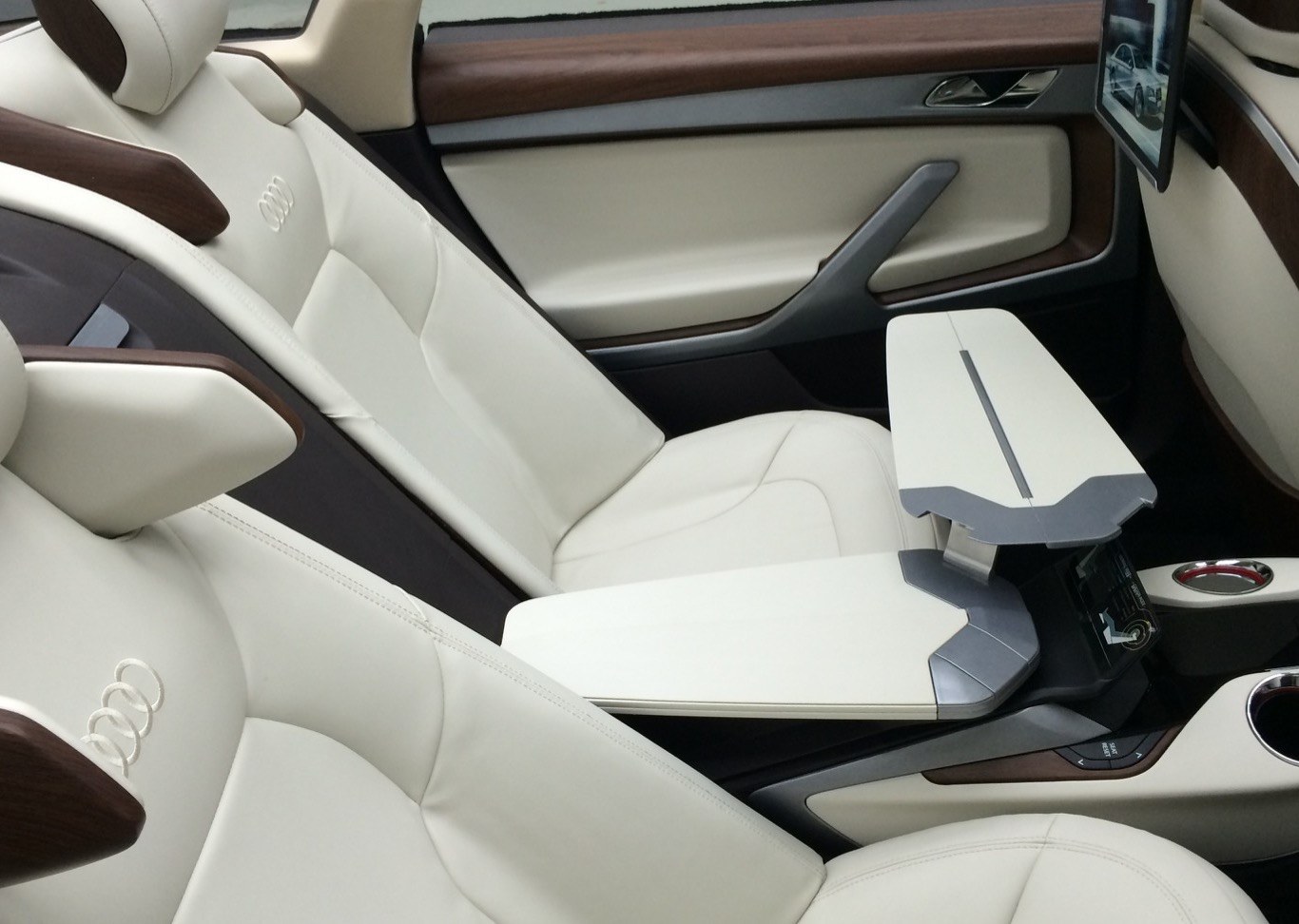
We checked the seat sections against the current A8 L, worked out the fold-away table in CATIA and Alias, and built the final theme as a full-size seating buck.

Starting an HMI team, Shanghai 2014 to 2015
After Audi I wanted interaction design as a regular studio service. In 2014 we set up an HMI team in Shanghai together with Technicon's HMI group in Munich, which already did UI design, animation and coding. Shanghai had a small dedicated UI team and drew on the studio's designers, digital modelers and animators when a project needed them.
In 2015 we designed instrument cluster UI for Continental, for Great Wall's Haval H8 and H9. The scope ran from analysis, layouts and flow charts to detailed screens, animation and a style guide. For Changan we did a cluster UI pre-study.


Moving content with gestures
We also worked on how a driver moves content between screens without hunting for a button. A swipe moves an app between the cluster, the navigation screen and the media screen. Two fingers switch between apps running in the background. Three fingers open the layout settings.


How we ran a UI program
Design and code ran side by side. The UI team went from visual concept and wireframes to final screens and animation, with a client buy-off at each step. In parallel a system architect and software engineers built the framework and coded in three rounds, each closed by a code review. A test on prototype hardware came before release.
Work stage Buy-off or review Client review